The Lost Generations of Indian Art
How Language, Documentation, and Colonial Transition Created Forgotten Chapters in Indian Art History
One of the lesser-discussed problems in Indian art history is the large gap in documentation between the late nineteenth and mid-twentieth century. While Indian art before 1880 was relatively well documented by European scholars, administrators, archaeologists, and travellers, the period between roughly 1880 and 1950 remains surprisingly fragmented in public awareness and scholarship.
This gap has deeply affected how Indian art history is understood today.
During the colonial period, especially before 1880, European writers documented Indian sculpture, miniature painting, architecture, temple traditions, decorative arts, and courtly practices extensively. Institutions, museums, surveys, and publications produced by British scholars and administrators created a large body of English-language material on Indian artistic traditions. Much of this writing, though shaped by colonial viewpoints, entered global academic circulation because it was available in English and published internationally.
However, the situation changed significantly in the late nineteenth and early twentieth century as modern Indian art began evolving rapidly within regional centres such as Calcutta, Bombay, Madras, Lahore, Baroda, and Santiniketan.
A large amount of artistic discourse during this period shifted into regional languages such as Bengali, Marathi, Gujarati, Tamil, and others. Art criticism, exhibition reviews, artist biographies, essays, journals, literary magazines, and institutional publications were often produced locally and circulated within limited intellectual circles. Many of these writings never received proper English translation or wider national circulation.
As a result, only a small group of artists eventually entered mainstream Indian art history through English-language scholarship and later international visibility. Figures such as Raja Ravi Varma, Abanindranath Tagore, Nandalal Bose, Jamini Roy, Rabindranath Tagore, and Amrita Sher-Gil became widely recognised because they were repeatedly discussed in  English-language books, museum exhibitions, institutional studies, and later auction markets.
But beyond these iconic names existed a much larger artistic ecosystem that gradually faded from broader public memory.
Several highly skilled and historically important artists today remain poorly known outside specialist circles because documentation about them survives mainly in old regional publications, rare journals, exhibition catalogues, newspapers, and forgotten magazines. Artists such as A.C. Chatterjee, B.C. Laha, Bimal Sil, Kalipada Ghoshal, Lalit Mohan Sen, Ananda Mohan Saha, Jogesh Chandra Seal, Basanta kumar Ganguly and many others belong to this overlooked generation whose contributions are still insufficiently researched.
This is not necessarily because their work lacked quality or historical importance. In many cases, these artists actively participated in exhibitions, taught at art institutions, illustrated literary journals, experimented with modern styles, or contributed significantly to regional artistic culture. However, without sustained documentation in widely accessible languages such as English or Hindi, their names slowly disappeared from national narratives.
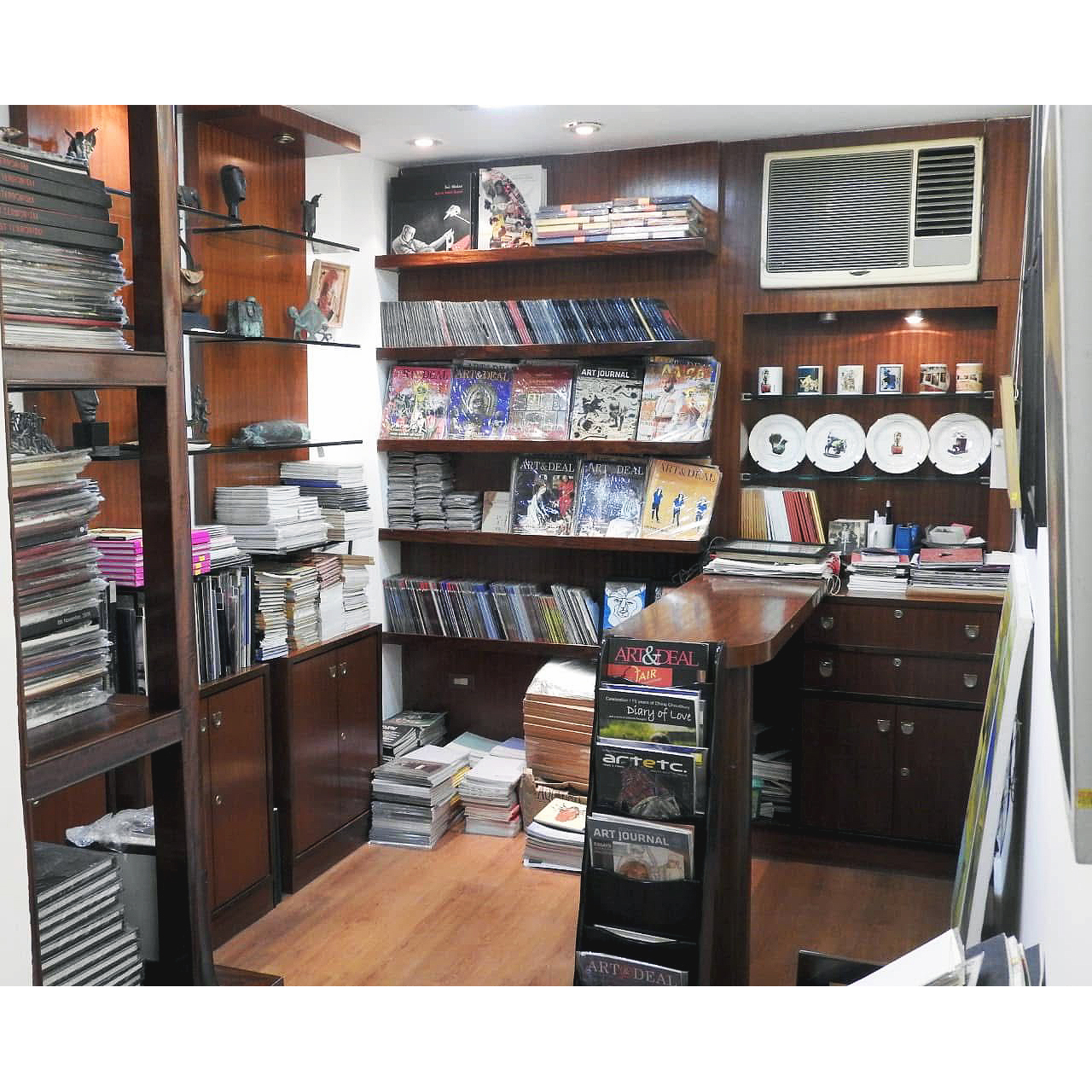
Another major issue is that many early art magazines, exhibition reviews, and catalogues were printed in limited numbers and never systematically archived. Unlike Europe, where museum systems and art libraries preserved large volumes of exhibition history, much of India’s early modern art documentation remained scattered across private collections, deteriorating libraries, family archives, or regional institutions with limited preservation resources.
This has created a distorted understanding of Indian modernism.
Today, Indian art history often appears overly centred around a relatively small number of canonical figures, while hundreds of regional artists, teachers, illustrators, printmakers, sculptors, and experimental practitioners remain largely invisible. Entire artistic movements and local art circles are still insufficiently studied simply because the source material has not been translated, digitised, or widely circulated.
The problem becomes even more important when considering Bengal and other regional art centres where intellectual and artistic discussions were deeply connected to local literary culture. Many important writings on art appeared not in formal academic books, but in literary magazines, little magazines, cultural journals, theatre publications, and regional essays. These texts often contain valuable observations about exhibitions, artists, teaching methods, public reception, and artistic debates of the time.
Translating these materials into English is therefore not merely a linguistic exercise. It is an act of cultural recovery.
Digitisation is equally important. Many rare magazines and publications from the early twentieth century are physically deteriorating. Without systematic archival work, an enormous amount of visual and intellectual history may disappear permanently within the next few decades.
This also presents an opportunity for galleries, researchers, collectors, institutions, and independent archives. The rediscovery of overlooked artists is often closely connected to the rediscovery of forgotten texts, reviews, and historical records. As more archival material becomes available digitally and in translation, many artists currently absent from mainstream discourse may gradually be reassessed within larger narratives of Indian modernism.
The future of Indian art scholarship may therefore depend not only on discovering new artworks, but also on rediscovering lost writing.
In many ways, India’s modern art history is still incomplete. Between the celebrated icons and the forgotten regional archives lies a vast unexplored territory waiting to be studied, translated, preserved, and understood.
-- Vikram Bachhawat
12-05-2026
Comments
Join the Discussion
Please login to post comments.
Login